
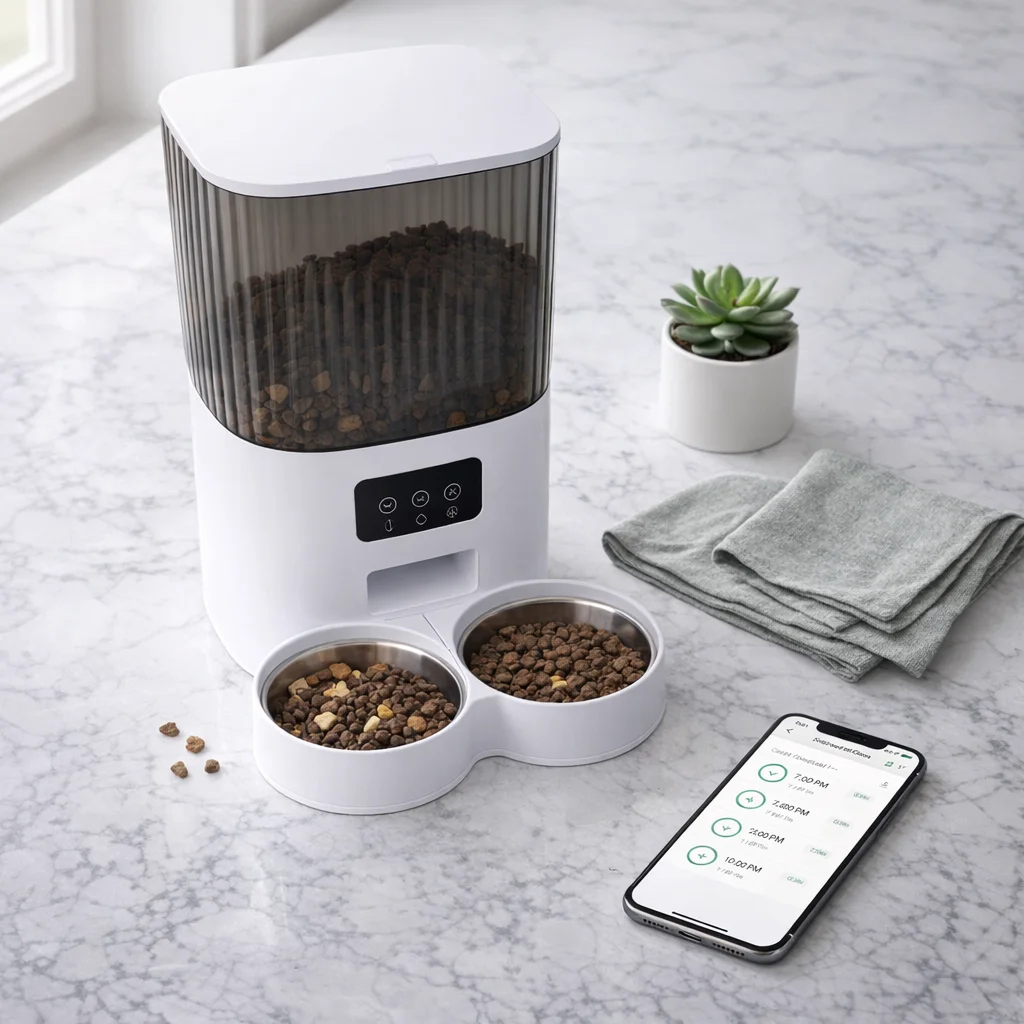
If you have ever rushed home from work in a panic because your cat's dinner was two hours late, or felt guilty leaving for a weekend trip and relying on a neighbor to remember feeding time, a smart cat feeder with WiFi scheduling is not a luxury. It is the single most practical upgrade you can make for your pet's wellbeing and your own peace of mind. This guide breaks down exactly what separates a genuinely useful automatic feeder from an overpriced gadget, and helps you decide whether the Pawvision 5L Smart Pet Feeder is the right fit for your home.
Why WiFi Scheduling Changes Everything for Cat Owners
Traditional automatic feeders have been around for decades. You set a mechanical timer, fill the hopper, and hope for the best. The problem is that hope is not a feeding strategy. Mechanical timers drift. Portions are inconsistent. And if something goes wrong at 2 a.m., you have no way of knowing until you wake up to a very vocal, very hungry cat.
WiFi scheduling flips that entire experience on its head.
Control From Anywhere, At Any Time
When your feeder connects to your home network, your phone becomes the control panel. Stuck in a meeting that ran long? Adjust tonight's feeding time in thirty seconds without leaving your desk. Flying home from a business trip and running behind schedule? Your cat's dinner is already handled. This kind of remote control sounds like a small convenience until the first time it saves you from a genuinely stressful situation.
The ability to schedule cat feedings via WiFi also means you can build a feeding routine that actually matches your cat's natural hunger rhythms rather than your own schedule. Cats thrive on consistency. A feeder that dispenses the same amount at the same time every day, without human error creeping in, supports healthier digestion and reduces anxiety-driven behaviors like excessive meowing or food aggression.
The Camera Changes the Relationship
A built-in camera turns a simple dispenser into a window into your cat's world. You can watch them eat, check that the food actually dispensed correctly, and catch any early signs that your pet is off their appetite. Vets consistently recommend monitoring eating habits as one of the earliest indicators of health changes in cats and dogs. A camera makes that monitoring effortless rather than something you have to actively remember to do.
"Consistent meal timing is one of the most underrated tools for managing a cat's weight and digestive health. Anything that removes human inconsistency from that equation is worth considering."
What to Actually Look for in a Smart Cat Feeder
The market for automatic pet feeders has exploded in the last few years, and not all of them deserve the "smart" label. Here is what genuinely matters when you are evaluating options, separated from the spec-sheet noise.
Capacity That Matches Your Life
The storage capacity of your feeder determines how often you need to refill it, which in turn determines how truly hands-off the experience actually is. A small hopper might work for a single cat on a strict diet, but if you have multiple pets or travel frequently, you need enough food on hand to cover several days without intervention. A 5-liter capacity sits in a comfortable sweet spot: large enough to provide genuine freedom, compact enough to fit naturally in a kitchen or utility space without dominating the room.
Portion Accuracy You Can Trust
This is where many cheaper feeders quietly fail. If your feeder dispenses wildly inconsistent portions, the health benefits of scheduled feeding disappear. Look for feeders that are engineered to handle both small kibble and larger pieces without jamming, and that deliver reliable quantities across every scheduled meal. Inconsistent dispensing is the number one complaint in negative reviews of automatic feeders, and it is worth paying attention to before you buy.
The Eating Surface Matters More Than You Think
Plastic bowls harbor bacteria in microscopic scratches, and many cats are sensitive to plastic-related chin acne. A feeder that pairs its technology with a proper stainless steel eating surface is not just a premium detail; it is a genuine health consideration. Stainless steel is easy to clean, resistant to bacterial buildup, and does not leach anything into your pet's food or water. When you are investing in a feeder that is supposed to support your cat's health, the surface they eat from every single day deserves the same thought as the technology powering the schedule.
App Experience and Connectivity Reliability
A smart feeder is only as good as the app controlling it. Before committing to any WiFi-connected feeder, it is worth researching the app's reputation. Does it connect reliably? Is the scheduling interface intuitive enough that you will actually use it? Does it send meaningful notifications, or does it flood your phone with noise? The best smart feeders feel like a natural extension of how you already use your phone, not like a homework assignment every time you need to make a change.
Noise Level During Dispensing
This sounds minor until you set a 6 a.m. feeding and your cat's feeder wakes up the entire household. Motor noise is a real differentiator between feeder quality tiers. A quieter dispensing mechanism also tends to stress cats less, particularly for anxious or skittish animals who might be startled by a loud mechanical sound associated with their food.
| Feature | Why It Matters | What to Watch For |
|---|---|---|
| WiFi Scheduling | Remote control, consistent timing | App stability, 2.4GHz compatibility |
| Storage Capacity | Determines refill frequency | Match to number of pets and trip length |
| Portion Consistency | Core health benefit | Reviews mentioning jamming or over-dispensing |
| Bowl Material | Hygiene and pet health | Stainless steel vs. plastic |
| Camera Quality | Remote monitoring and peace of mind | Night vision, field of view |
| Noise Level | Household and pet comfort | Motor reviews, early morning scheduling |
Pawvision 5L Smart Feeder: An Honest Review
The Pawvision 5L Pet Feeder with Camera sits in the mid-tier price range, which is exactly where most thoughtful buyers end up after doing their research. Budget feeders tend to disappoint on consistency and app reliability. Premium feeders often charge for features that most households will never use. This feeder targets the sweet spot: meaningful technology, real build quality, and a price that reflects genuine value rather than brand markup.
The Feeding Experience
Setting up a WiFi feeding schedule through the companion app takes a few minutes the first time and becomes second nature quickly. You can program multiple meals per day, adjust portion sizes for each individual feeding, and make changes on the fly from anywhere. For multi-pet households, this flexibility is particularly valuable since morning and evening nutritional needs often differ.
The dispensing mechanism handles a range of kibble sizes without the jamming issues that plague cheaper models. Portions are consistent meal to meal, which matters enormously if you are managing a cat's weight or following a veterinarian's dietary recommendations. This is not a feeder that makes you second-guess whether your pet actually got their full meal.
The Camera as a Daily Companion
Having a live view of your pet's feeding area becomes more useful than most people expect before they experience it. Beyond the obvious reassurance of confirming a meal dispensed correctly, the camera becomes a way to stay connected to your pet during long workdays. There is something genuinely comforting about being able to check in on a sleeping cat from a conference room three miles away. For pet owners who travel, it transforms the experience from anxious guessing to calm observation.
The Stainless Steel Bowls: A Detail Worth Noting
The integrated stainless steel bowls are one of this feeder's most practical differentiators. They lift out for easy cleaning, which is exactly how it should work for something that gets used multiple times every day. The overall design feels considered rather than assembled, with a clean aesthetic that fits into a modern kitchen without looking like a piece of industrial equipment.
Honest Limitations
No feeder in this price range is perfect, and intellectual honesty requires acknowledging the trade-offs. Like most smart home devices in this category, connectivity requires a 2.4GHz network, which is standard but worth confirming before setup. The app, while functional and reliable for core scheduling tasks, lacks some of the advanced analytics features found in feeders at twice the price. If you want detailed nutritional tracking graphs and multi-user household management with granular permissions, you may eventually want to step up. For the vast majority of cat and dog owners who simply want reliable scheduled feeding with remote control and a camera view, this feeder delivers on every meaningful metric.
"The best smart feeder is the one you actually set up and use consistently. A feeder with a genuinely reliable app and accurate dispensing beats a feature-loaded alternative that frustrates you into reverting to manual feeding."
Who Genuinely Needs a WiFi-Scheduled Cat Feeder
Automatic feeders are sometimes dismissed as a convenience gadget for lazy pet owners. That framing misses the point entirely. Here are the real situations where a smart automatic cat feeder transitions from nice-to-have to genuinely important.
The Frequent Traveler
If your work takes you away from home regularly, or if you take more than one or two trips per year, a WiFi feeder fundamentally changes your travel experience. Instead of coordinating with pet sitters for every single feeding, you handle the food automatically and ask your sitter to focus on playtime and litter. Your cat maintains their routine even when you are not there. That consistency reduces stress for the animal and guilt for the owner.
The Weight-Management Household
Overweight cats are an epidemic in domestic pet populations, and free-feeding is a major contributor. A scheduled feeder with precise portion control is one of the most effective tools for managing a cat's caloric intake without requiring you to be physically present for every meal. If your vet has recommended a weight management plan, a quantitative automatic feeder is not optional. It is the implementation tool that makes the plan actually work.
Multi-Pet Homes
When you have both cats and dogs, or multiple animals with different dietary needs, the ability to program separate feeding schedules and quantities becomes genuinely essential. A smart feeder gives you the control to treat each animal as an individual rather than defaulting to the lowest-common-denominator approach of putting food down and hoping everyone eats appropriately.
Early Risers (The Feline Kind)
If your cat has decided that 4:30 a.m. is an appropriate time to demand breakfast, a scheduled feeder is the most effective training tool available. When the feeder, rather than you, becomes the source of food, cats quickly redirect their anticipatory behavior toward the machine. Many owners report that their cats stop waking them up within the first week of using a scheduled automatic feeder.
Getting the Most Out of Your Automatic Feeder
Buying the right feeder is step one. Getting the full benefit from it requires a few intentional habits during setup and the first few weeks of use.
Build the Schedule Around Your Cat, Not Your Convenience
Most adult cats do well with two to three meals per day, spaced to align with their natural activity peaks, typically early morning and early evening. Resist the temptation to simply mirror your own meal schedule. Spend a few days observing when your cat is most active and hungry, then build the feeding schedule around those natural rhythms. The consistency that comes from a programmed schedule is most beneficial when it aligns with your pet's biology.
Use the Camera Actively for the First Two Weeks
During the transition period, check the camera feed after each scheduled meal to confirm the dispense worked correctly and that your cat is eating normally. This gives you confidence in the system and helps you catch any adjustment issues early, whether that is a portion size that needs tweaking or a cat that is taking longer than expected to trust the new device.
Clean the Bowls on a Regular Schedule
The convenience of automation can make it easy to forget that the physical components still need regular maintenance. Set a weekly reminder to remove and wash the stainless steel bowls, and periodically wipe down the dispensing area. A clean feeder is a healthy feeder, and the stainless steel construction makes this task genuinely quick rather than a chore.
Keep the App Updated
Smart home devices improve meaningfully through software updates. Keeping the companion app current ensures you have access to the latest scheduling features, connectivity improvements, and any bug fixes that have been released since your initial setup. It takes thirty seconds and makes a real difference in long-term reliability.
Frequently Asked Questions
Can I use a smart cat feeder with WiFi scheduling if I have both cats and dogs?
Yes, and multi-pet households are actually one of the strongest use cases for a WiFi-scheduled automatic feeder. The ability to program precise portions and specific timing means you can structure meals around each animal's needs. For homes where cats and dogs have different dietary requirements, positioning feeders in separate areas and using the scheduling features to stagger meal times helps ensure each pet eats their own food without competition or confusion.
What happens to my cat's feeding schedule if the WiFi goes down?
This is one of the most important practical questions to ask about any smart feeder. Quality automatic feeders store the feeding schedule locally on the device itself, meaning your programmed meals continue to dispense on time even without an active internet connection. The remote control and camera features require connectivity, but the core feeding function should never depend on your network being up. Confirm this capability before purchasing any WiFi feeder.
How do I transition my cat from manual feeding to an automatic feeder?
Most cats adapt within a week or two, though the pace varies by personality. Start by placing the feeder in the same location where you currently feed your cat. For the first few days, you can dispense meals manually using the feeder rather than switching to full automation immediately. This helps your cat associate the machine with food in a positive way before the scheduled dispensing begins. Anxious cats may take longer, but the consistency of scheduled feeding tends to reduce overall food anxiety over time rather than increase it.
Is a 5-liter capacity enough for multiple cats?
For two cats eating typical adult portions across two to three meals per day, a 5-liter hopper provides roughly five to seven days of capacity before needing a refill. For a single cat, you are looking at potentially two weeks between refills. If you have three or more cats or particularly large dogs, you may find yourself refilling more frequently than ideal. The honest answer is that capacity needs scale directly with the number and size of your animals, so factor your specific household into the calculation.
Do I need any special tools or technical knowledge to set up a WiFi cat feeder?
No technical background is required. The setup process for modern smart feeders is designed to be completed by anyone comfortable using a smartphone. You download the companion app, follow the in-app pairing instructions, connect to your home network, and you are ready to program your first schedule. The entire process typically takes under fifteen minutes. The one practical requirement is a 2.4GHz WiFi network, which is standard in virtually all home routers, though some newer routers require you to confirm this setting in your network preferences.
The Bottom Line
A smart cat feeder with WiFi scheduling is one of those purchases that quietly improves daily life in ways you stop noticing because the problem it solves simply disappears. Rushed evenings, guilty trips, inconsistent portions, 4 a.m. wake-up calls from a hungry cat. All of it handled, automatically, from wherever you happen to be.
The Pawvision 5L Smart Pet Feeder with Camera earns its place as a genuine recommendation rather than a default suggestion. The combination of reliable scheduling, accurate portion dispensing, a live camera view, and stainless steel feeding bowls represents exactly the right set of priorities for a mid-tier automatic feeder. It does the important things exceptionally well without charging you for features you will never use.
If you are ready to stop worrying about your pet's meals and start trusting a system that handles it for you, this is the feeder worth starting with.
Shop the Pawvision 5L Smart Pet Feeder with Camera and give your cat the consistent, healthy feeding routine they deserve.